
Land Clearing
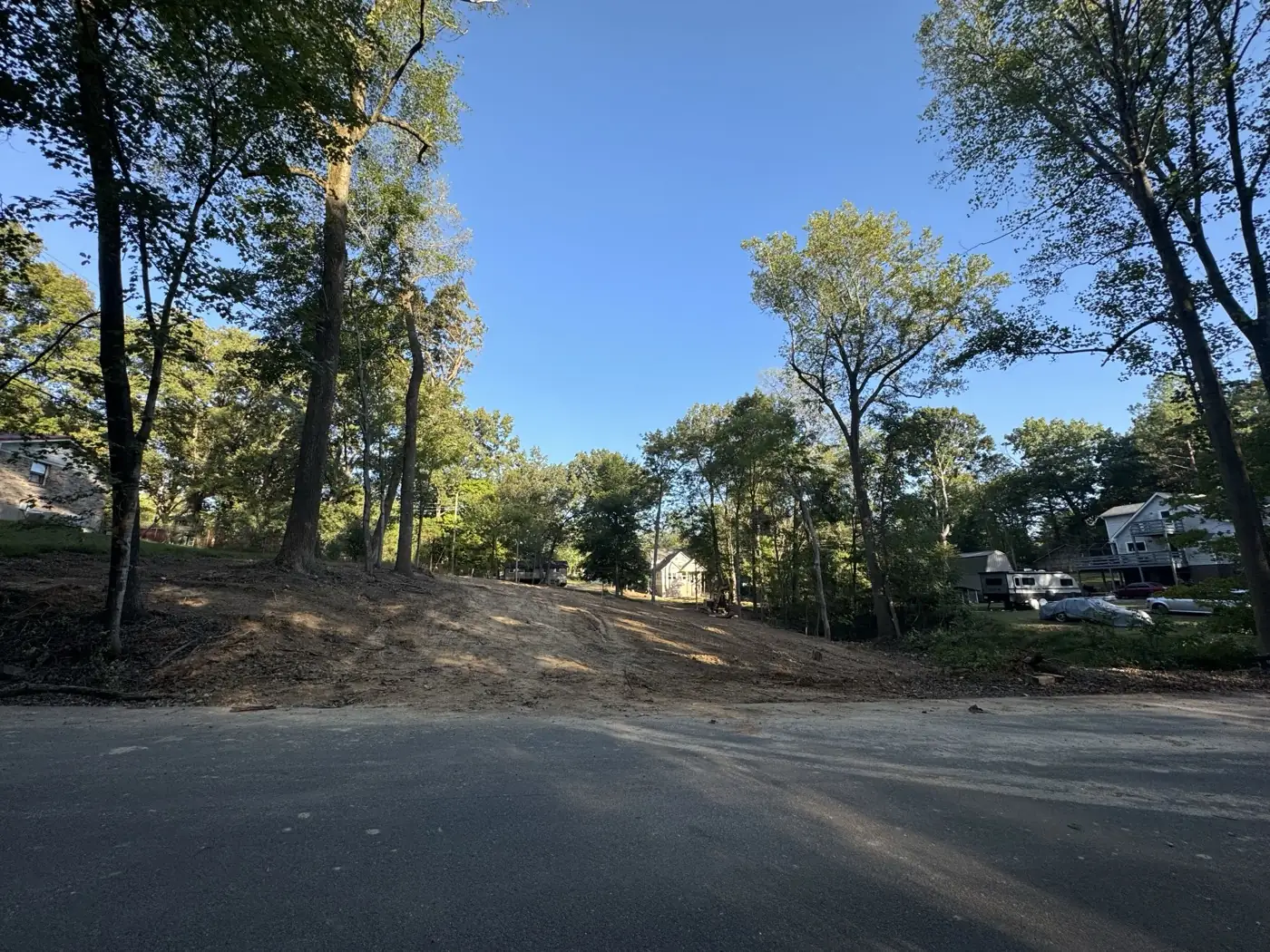
We clear lots and acreage of trees, brush, and stumps across Montgomery County and Middle Tennessee. The ground gets cleaned up so it is ready to build on or put back into pasture.
Learn More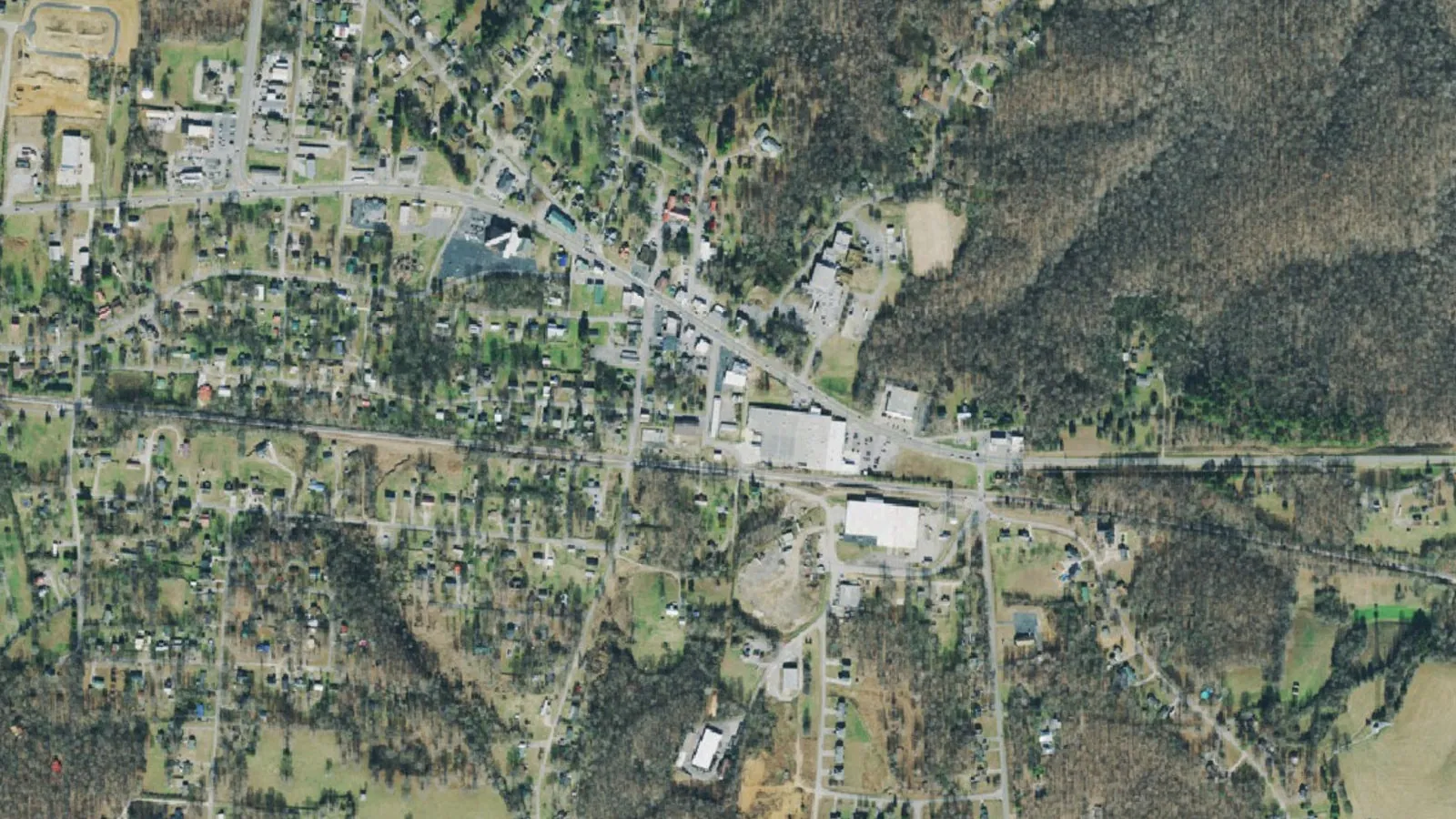
Building in White Bluff means planning the ground before any digging starts. A project that needs a building permit also needs a site development plan when you apply. That plan shows where the house, driveway, drainage and utilities go, and a surveyor or engineer stamps it. On a wooded lot, the town's woodland protection rules also set how much tree canopy has to stay.
We are Wilson Forestry and Excavating, an excavation contractor based in Woodlawn, just west of Clarksville. White Bluff sits about 37 miles southeast of us as the crow flies. We travel there for excavation and dirt work and for land clearing planned around the trees that stay. Call or text (931) 572-8673 for a free estimate.
Tell us about the job and the ground. We will get right back to you.
White Bluff got its name from the white bluffs along nearby Turnbull Creek. Fort White Bluffs went up in 1806, and the White Bluff Iron Forge started soon after. The current town grew out of a Civil War era Union Army camp and was platted in 1867. Today it sits on US 70 at its junction with State Route 47.
At the 2010 census, White Bluff had 3,206 people and was the second largest town in Dickson County. It grew 49.7 percent from 2000 to 2010. The 2020 census counted 3,862 people and 1,597 housing units. Every resident lived in an area the Census counts as rural.
Building here follows the 2021 International Residential Code and the 2021 International Plumbing Code. Much of our excavation work comes from builders and commercial contractors. We dig foundations and basements and cut building pads to the site plan.
The town's subdivision rules call for lots that drain away from every building. Site prep and grading gives the lot that slope. Except at the building site, those rules also keep topsoil on a residential lot, spread back as cover. If water already sits against your foundation, French drains and yard drainage move it away from the house.
White Bluff's woodland protection rules apply to any new home and any newly platted development. They also reach permitted clearing, grading and filling, specimen tree removal and timber harvesting. On a lot under these rules, no vegetation comes out until the permit is issued. Dead and fallen trees are exempt, and so are trees on the Tennessee Exotic Pest Plant Council's invasive list.
Clearcutting is strictly prohibited, and a clearcut property has its approvals and land disturbance permits suspended for three years. Specimen trees stay too, except on an individual lot of one acre or less. Any hardwood in fair or better shape, 30 inches or more across at chest height, counts as a specimen tree. For softwoods such as pine, the mark is 36 inches.
A table in the rules sets how much tree canopy stays on a lot. A lot that is 91 to 100 percent wooded keeps at least 48 percent of its canopy. One that is 10 percent or less wooded keeps at least 75 percent. The count looks back two years, so trees cut in that time still count.
So a White Bluff clearing job gets planned around the trees that stay. We clear the building area and the drive, and the stumps there come out with an excavator and its thumb. Underbrushing clears the brush and saplings from under the trees you keep. That work runs on forestry mulching, which grinds the undergrowth to mulch on the spot.
White Bluff's subdivision regulations set firm driveway rules, and none of them is eligible for a variance. A drive can be no steeper than 10 percent for its first 20 feet. Every driveway is at least 20 feet long. Drives and parking areas have to drain so water does not run onto the public right of way.
Those rules also call for a hard surface such as asphalt or concrete. Gravel or other loose surfacing is not permitted. We cut and grade the drive to the town's numbers, and a paving contractor lays the surface. The town's codes department can tell you how these rules apply to your lot.
Where the drive meets the street, a house's access point can be no more than 30 feet wide. The town's access rules also call for ditch-line culverts at least 18 inches across. The town can approve removing a tree in the drive's path when a grading plan shows it cannot stay. Each removed tree 8 inches or more across at chest height is replaced inch for inch.
For a new build, the site plan also shows the construction entrance and its temporary gravel surface. Building that entrance is part of our gravel driveway and access road work, along with farm and timber roads. Access roads are one of our specialties, because our roots are in timber-company road building.
The town's subdivision rules protect any sinkhole or natural channel that moves or stores groundwater. Erosion plans under those rules keep clearing to a minimum and stabilize disturbed ground as soon as possible. Once clearing, grading or excavation disturbs an acre or more, the state construction stormwater permit applies too. We wrote a guide to Tennessee land clearing permits that covers the state side.
Erosion control holds the soil in place while the ground is open. Silt fence goes in on the low side before the digging starts. Seeding and matting then cover the bare ground until grass holds it.
A 1946 fire destroyed much of White Bluff and underlined the need for a permanent water supply. That push led to the White Bluff Utility District, formed in 1965. Our guide covers how deep a water line has to go in Tennessee.
For underground utilities, the trench is our part of the job. We dig it, and once the water line, conduit or sewer line is in, we backfill it. Hookups go to a licensed plumber or electrician. Before any digging, Tennessee 811 gets notice 3 to 10 working days ahead.
Communities and areas we serve around White Bluff: Kingston Springs, Burns, Pegram, Charlotte, Dickson, Fairview, Bon Aqua Junction, Ashland City, Vanleer.
White Bluff ZIP codes served: 37187.
Free estimates throughout Dickson County and the surrounding area.
(931) 572-8673 We clear lots and acreage of trees, brush, and stumps across Montgomery County and Middle Tennessee. The ground gets cleaned up so it is ready to build on or put back into pasture.
Learn More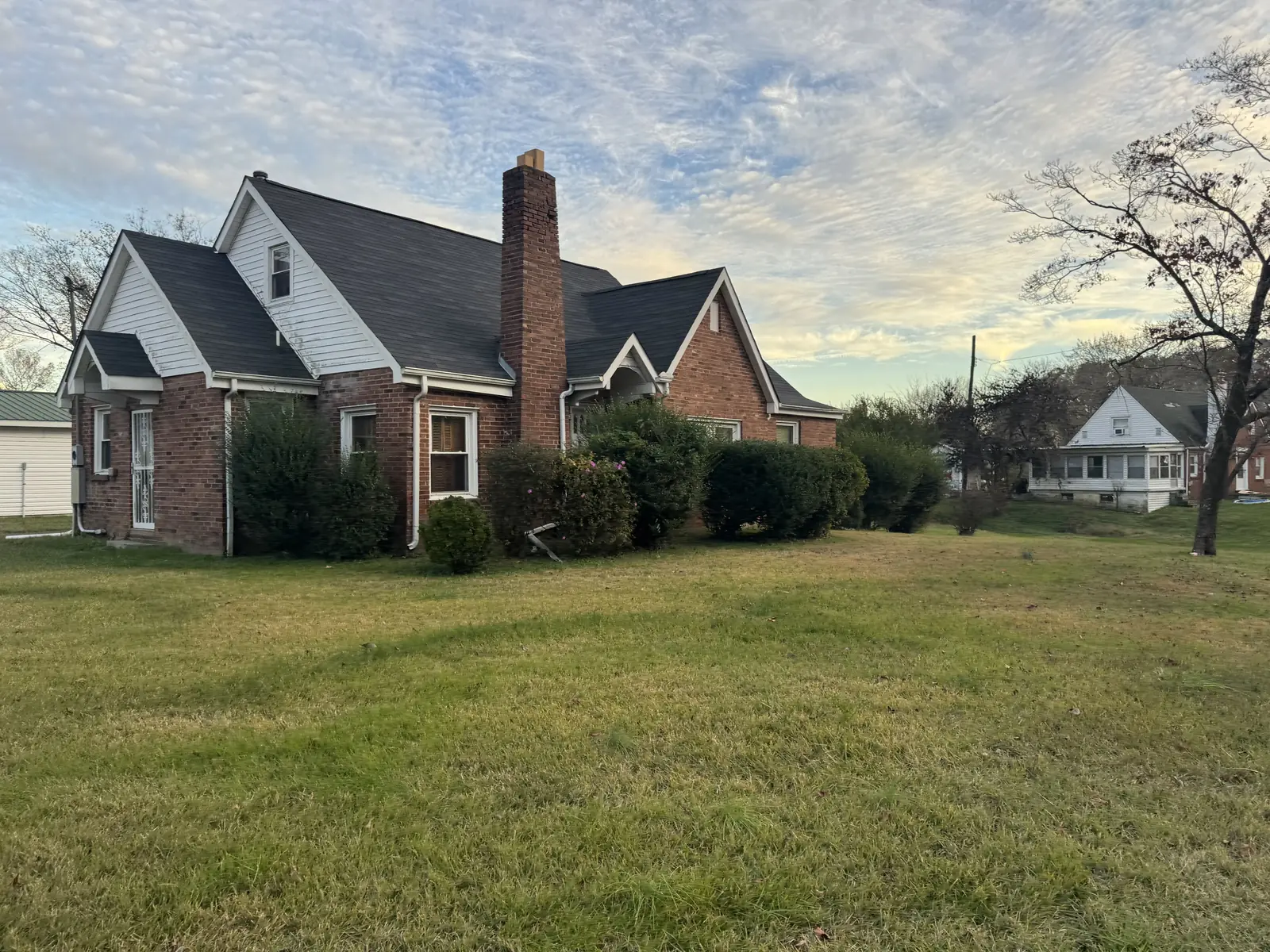
We tear down houses and other residential structures, barns, sheds and detached garages, load the debris out, and leave the lot cleared. Builders call us to take an old house down and regrade the lot for new ones.
Learn More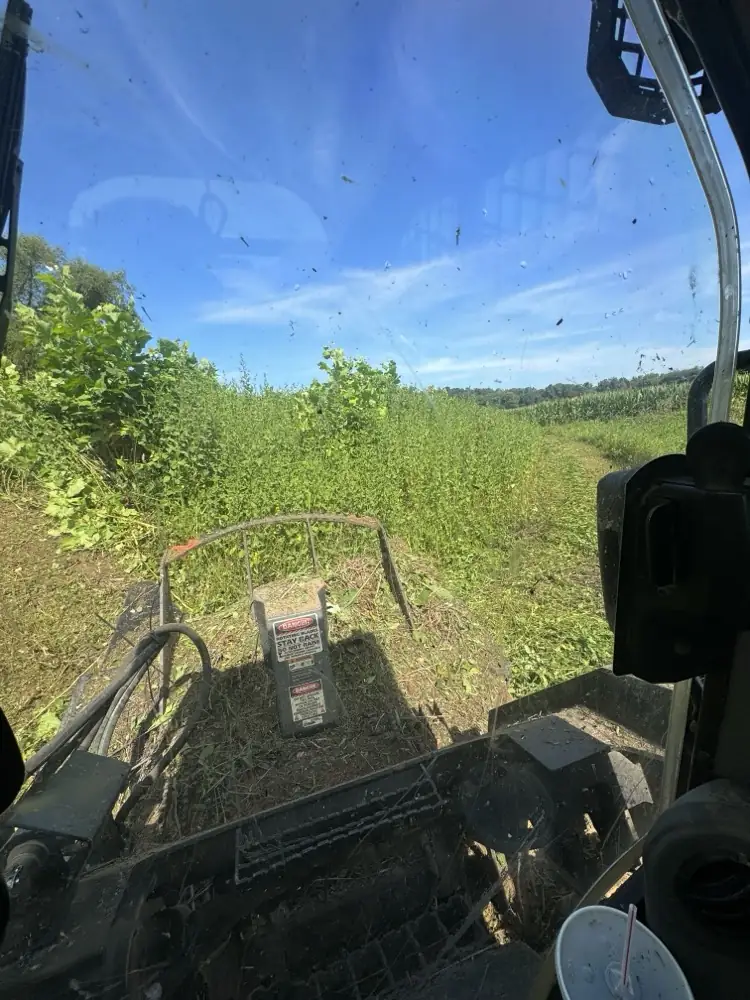
A skid steer with a forestry mulcher head grinds brush, saplings, and undergrowth into mulch right where it stands. We also bush hog overgrown fields and pastures back to usable ground.
Learn More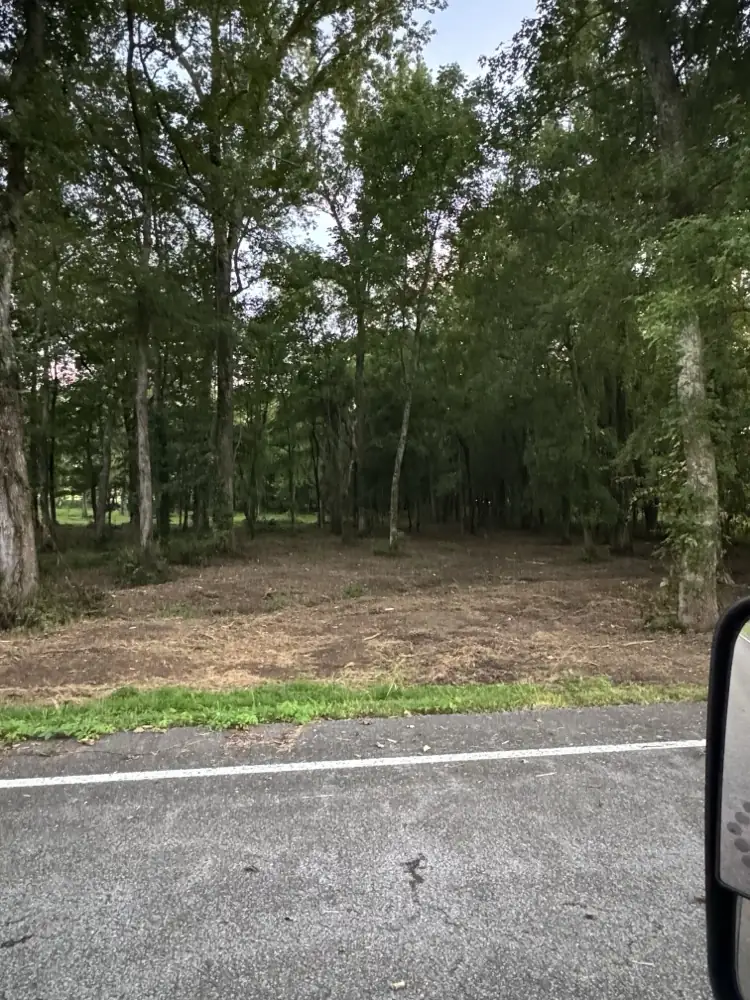
Underbrushing clears brush, briars and saplings out from under the trees you keep. Privet and honeysuckle thickets become mulch on the ground, and the hardwoods stay standing.
Learn More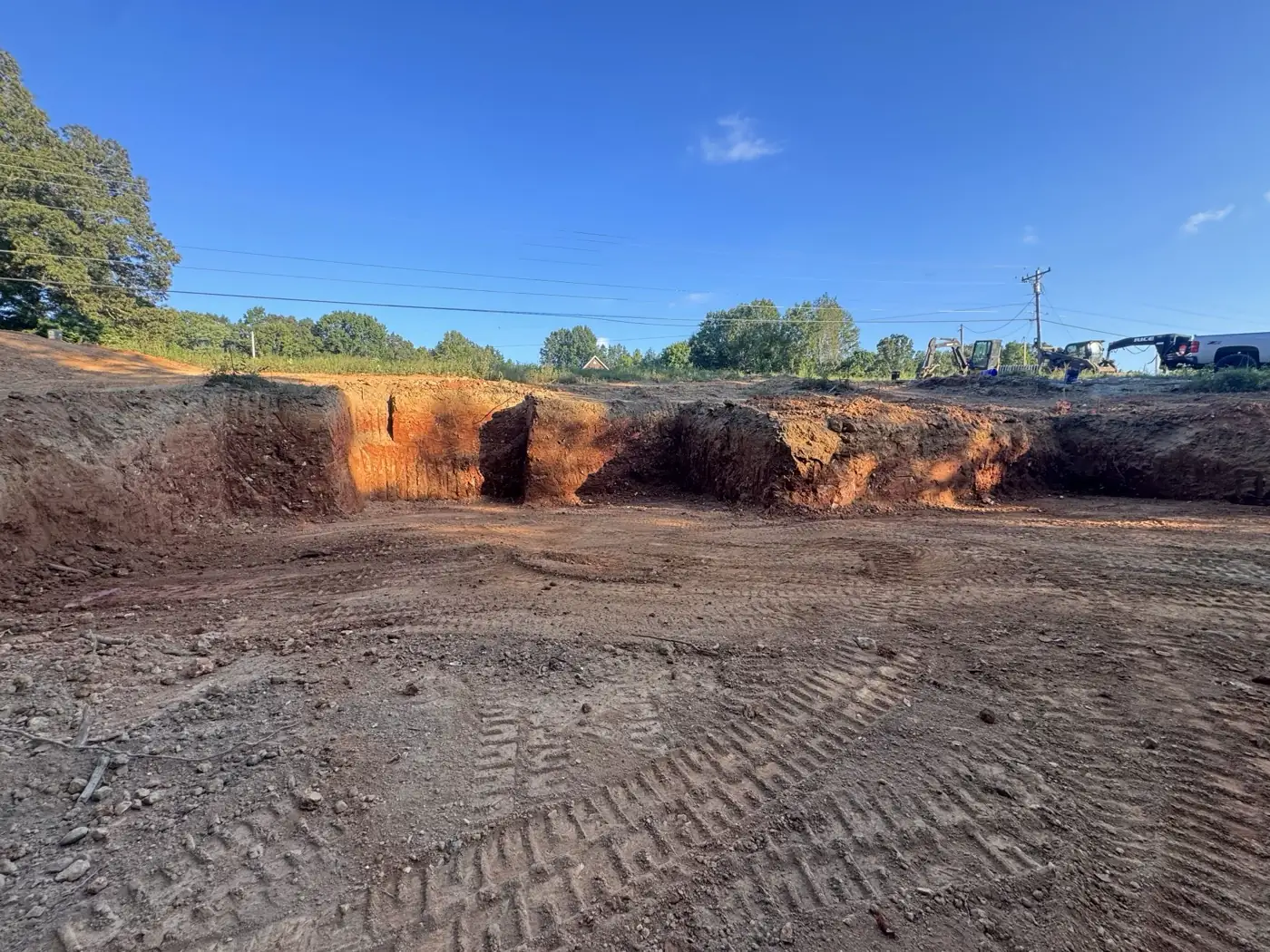
We handle the dirt work before a build: building pads, cut and fill, rough and finish grading, and driveway cuts. The ground ends up level where it should be and sloped so water leaves the site.
Learn More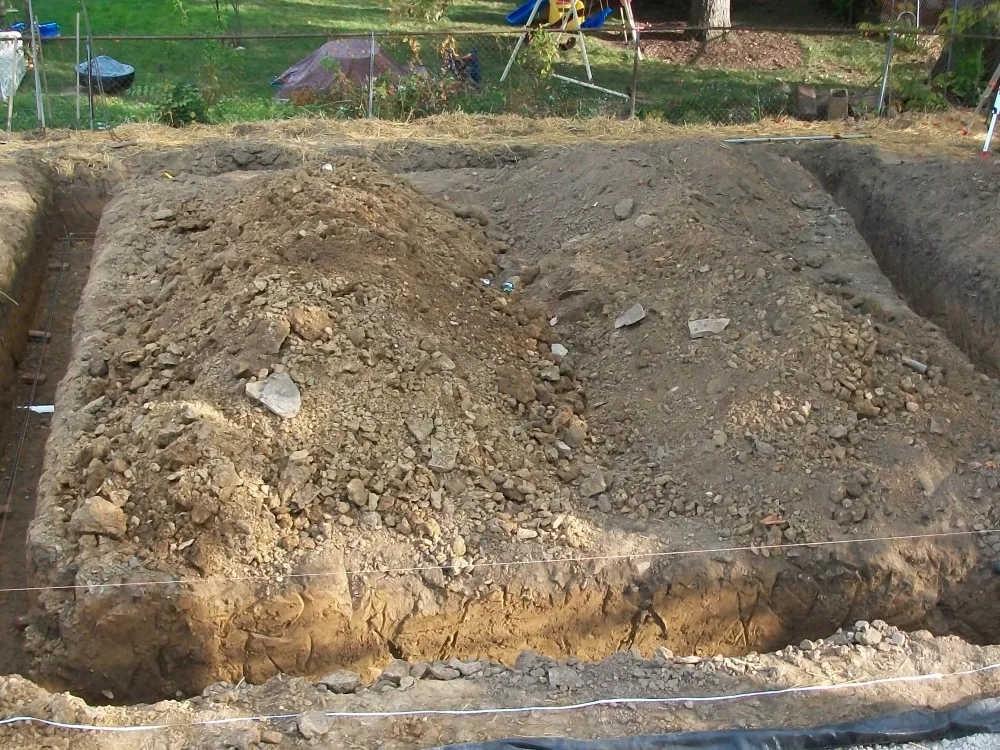
We dig footers, crawl space and slab perimeters, and basement holes to the line and depth on the plans. A concrete crew forms and pours, and we backfill once the walls are ready.
Learn More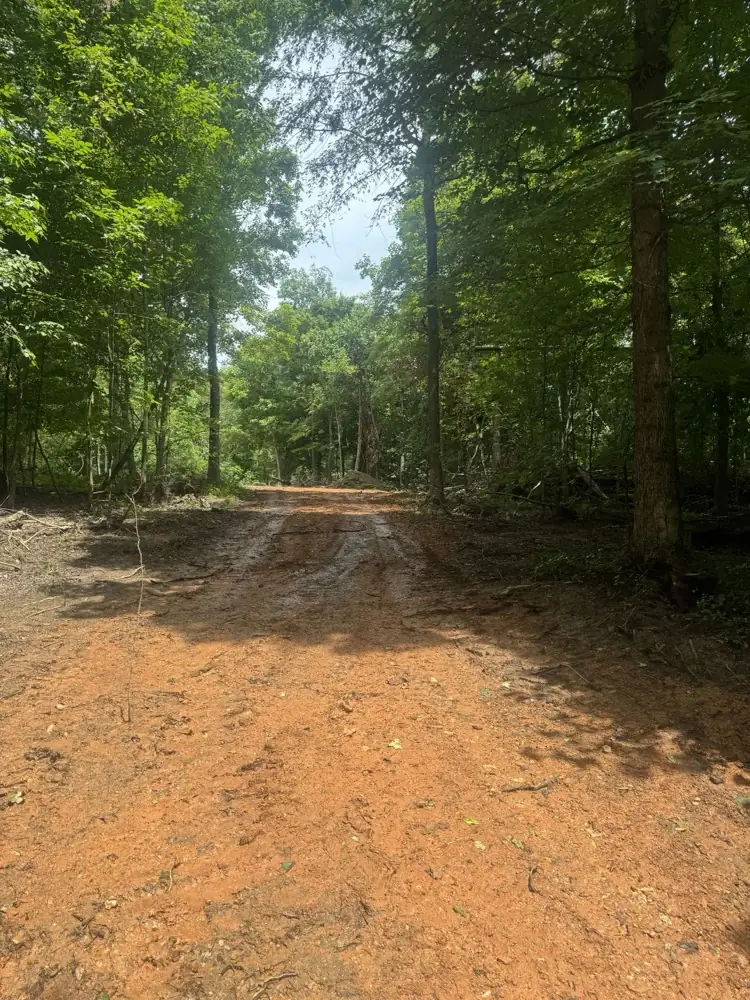
We build new gravel driveways, farm roads and access roads across Montgomery County and out toward Nashville. The road bed gets cut and stoned, then crowned so water sheds off instead of standing in the tracks.
Learn More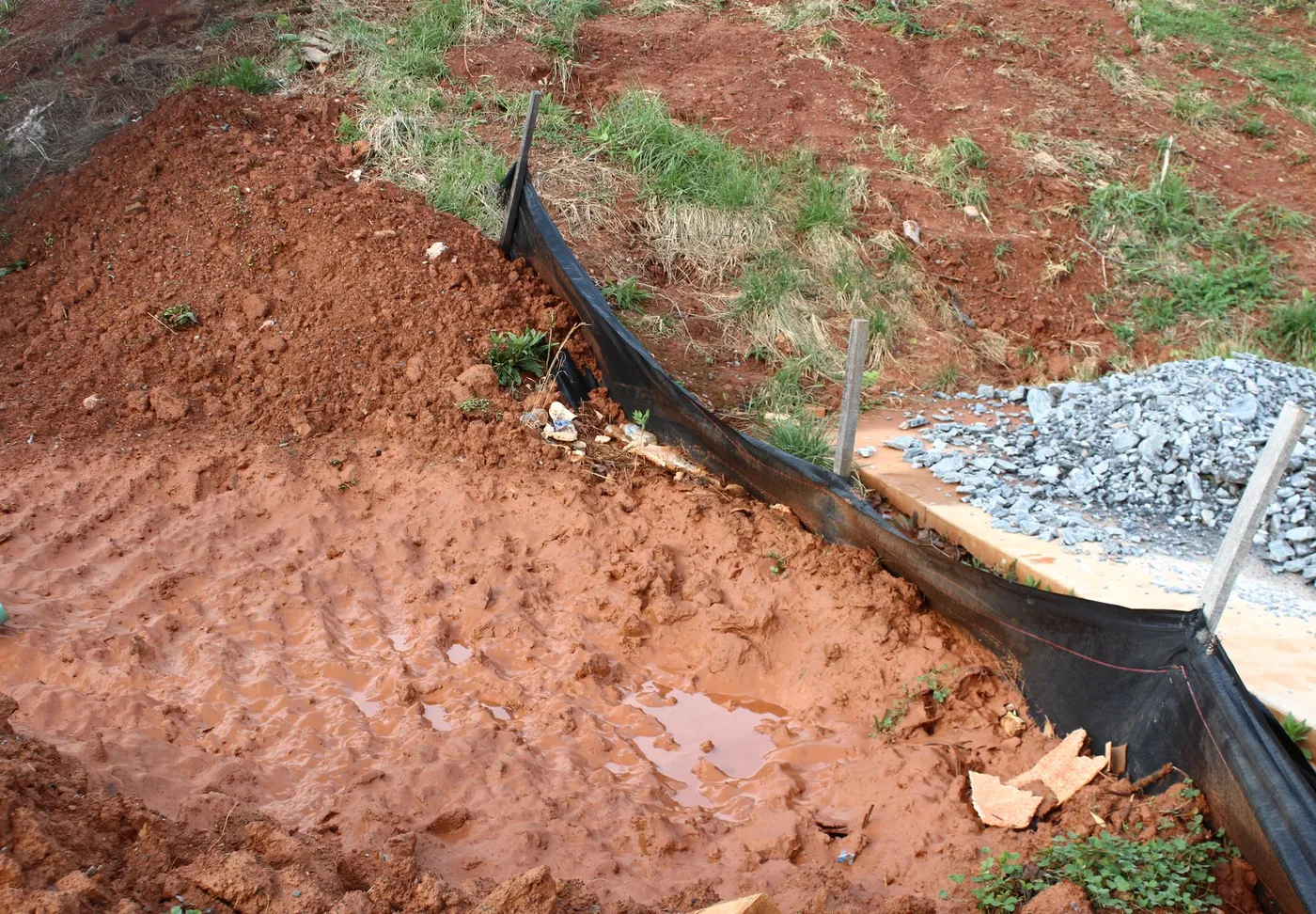
We install erosion control measures that keep soil on site and out of the ditch: silt fence, rock check dams, riprap and seeding.
Learn More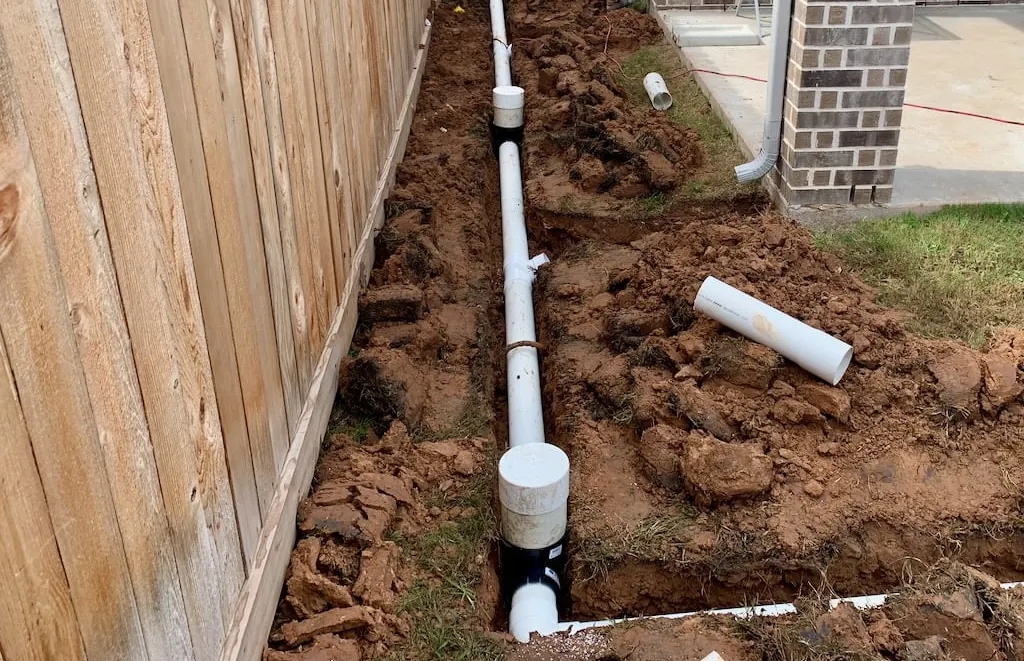
Water standing in the yard or against the house needs a way out. We regrade the ground and put in French drains and pipe that carry it off.
Learn More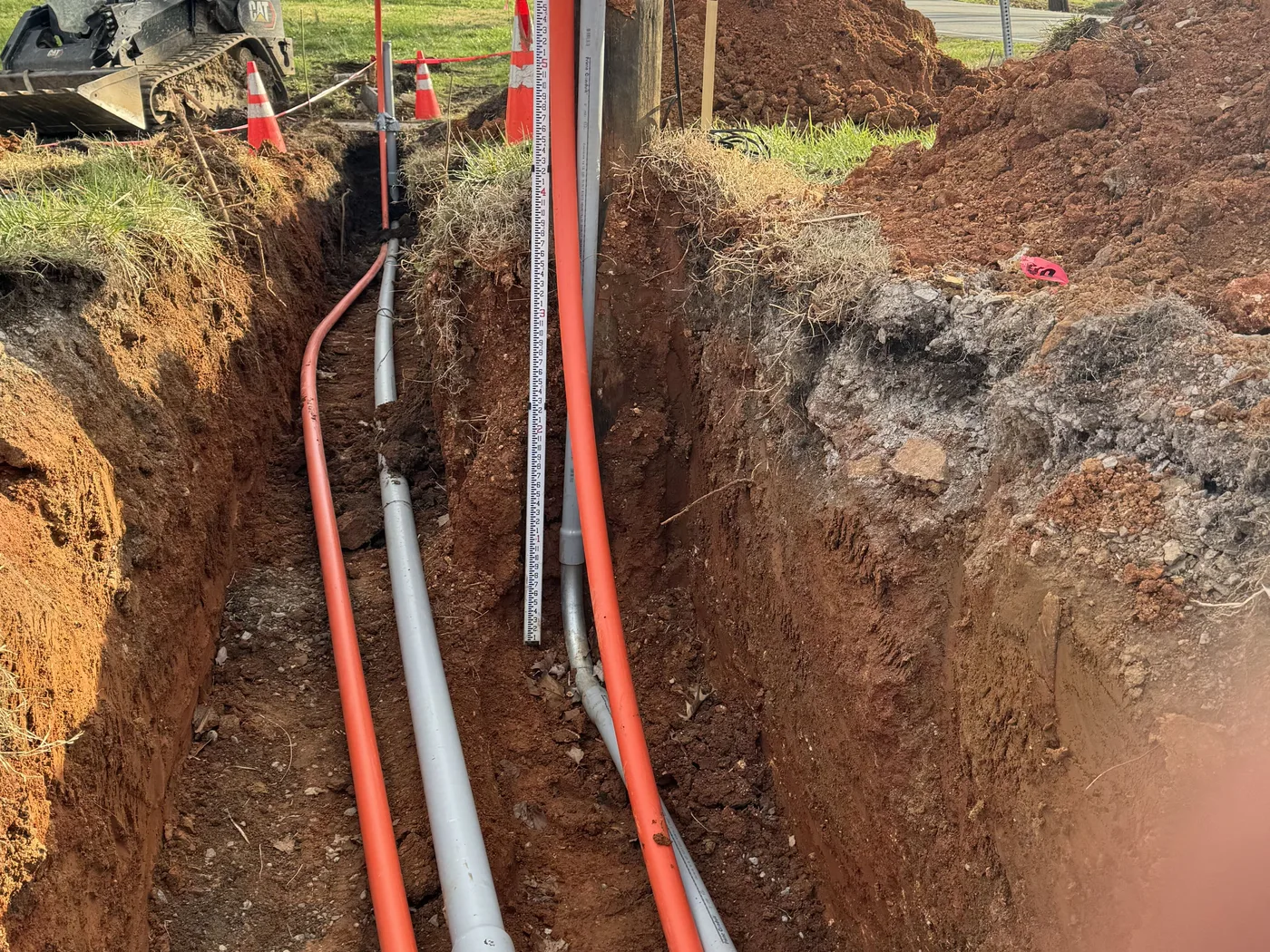
We trench and backfill for water lines, electrical conduit, sewer lines, and septic lines. Your plumber or electrician makes the connections, and we handle the digging and the ground work.
Learn More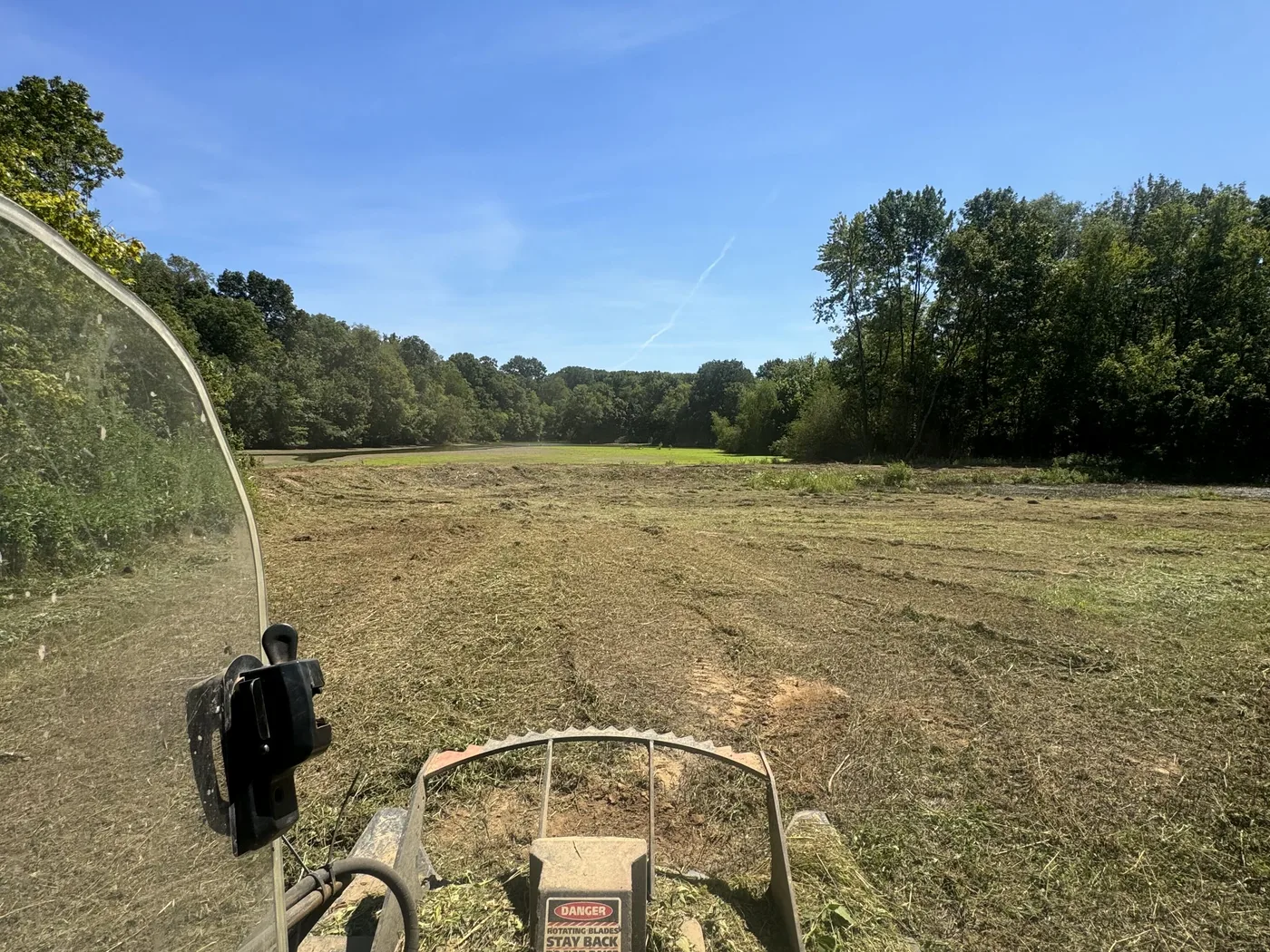
A rotary brush cutter on the skid steer knocks tall grass, weeds, and briars flat. One pass puts an overgrown field or pasture back to open ground you can use.
Learn More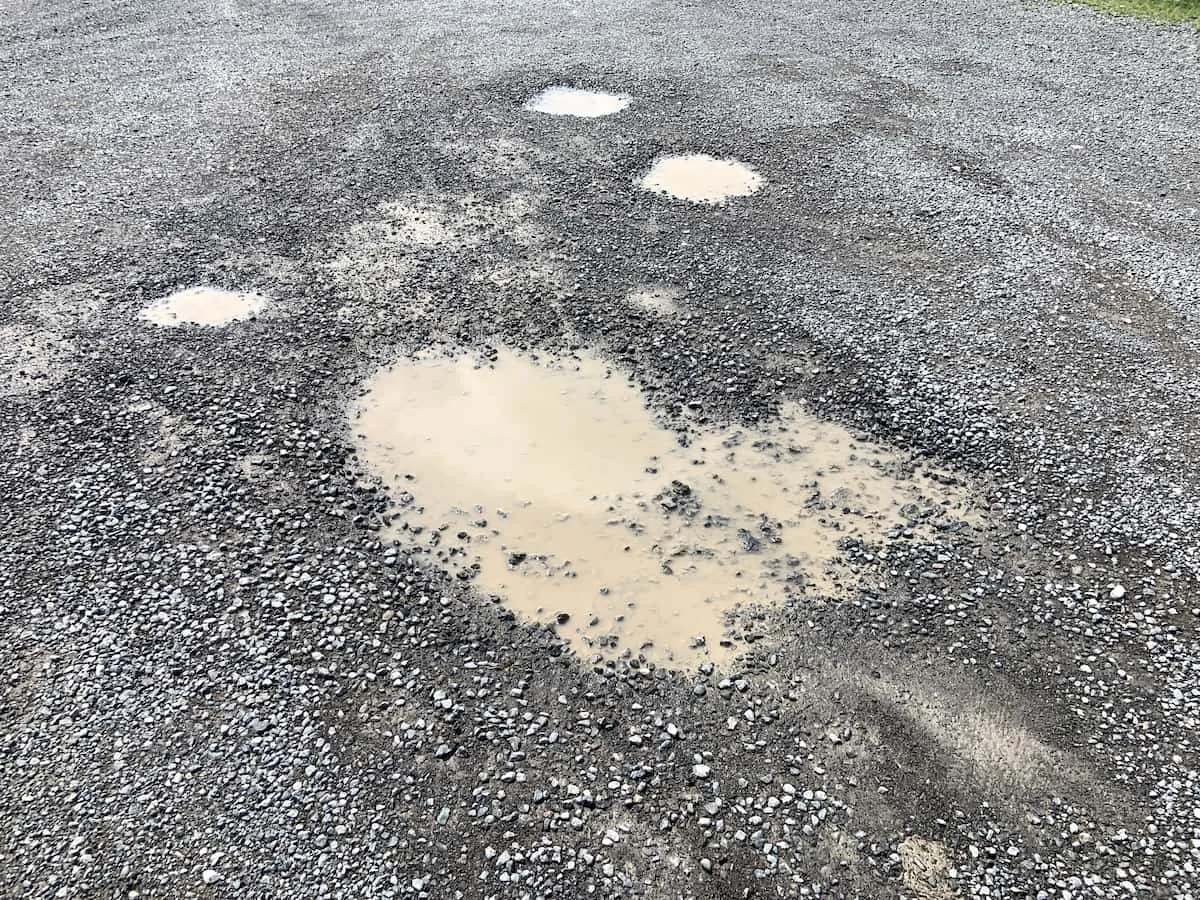
We fix gravel driveways and farm roads that have gone rough. The old surface gets cut loose, reshaped and crowned, then new stone goes on top.
Learn MoreA few of the questions we hear most around White Bluff. If yours is not here, call or text and ask.
Tell us what the job is and where the property sits, and we will get you an estimate. You can also call or text (931) 572-8673 if that is faster.
Tell us about the job and the ground. We will get right back to you.